No patient will ever compliment your plant room, but every handpiece, every aspirator and every surgery in your practice depends on it. Undersized or poorly planned air and suction equipment is a common cause of practice-wide frustration, and one of the most expensive things to fix after a fit-out. Borg Dental supplies, installs and services dental compressors and suction systems for practices in Melbourne and across Victoria. Here is how to get your plant room right the first time.
Size for the practice you will become
Compressors and suction systems are rated by the number of surgeries they can support at the same time.
Count today’s chairs and tomorrow’s
Start with your current number of chairs, then add any surgeries you may open in the next five to ten years. Running new pipework and replacing plant later costs far more than allowing headroom now.
Use manufacturer ratings
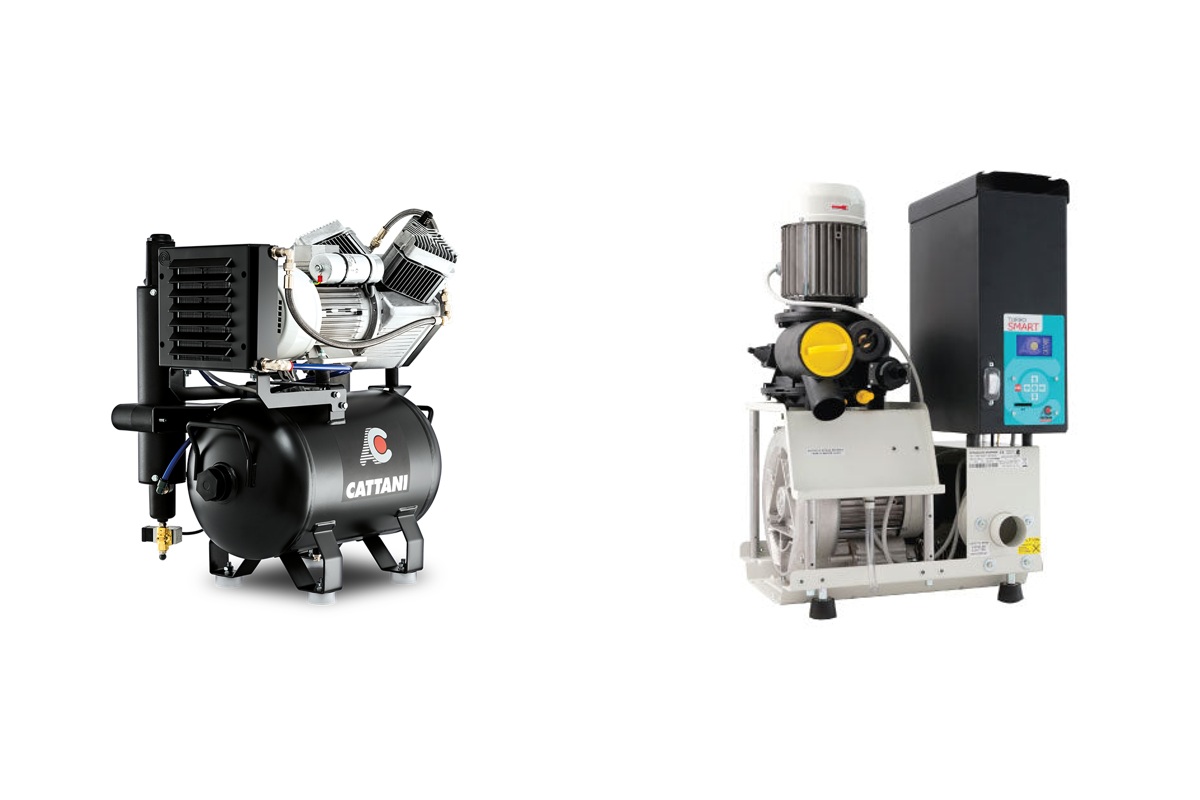
Cattani and Dürr Dental publish clear ratings across their ranges. For example, Cattani’s Turbo Smart suction systems are offered in sizes for different numbers of simultaneous users, and Tandem configurations are designed for larger practices with built-in redundancy. Browse our compressors and suction systems.
Air quality is non-negotiable
Dental compressed air comes into contact with the patient’s mouth, so it must be clean, dry and oil-free.
- Choose oil-free compressors designed for dental use.
- Include effective air drying to keep moisture out of the lines.
- Filter the air to protect handpieces, turbines and patients.
- Maintain dryers and filters on a regular schedule.
Moisture in air lines can damage handpieces and encourage microbial growth in pipework. This is one area where budget compressors can cost more over time than they save at the start.
Suction performance and efficiency
Central suction should deliver consistent performance at every chair, even when all surgeries are busy.
Inverter technology
Inverter-controlled systems, such as Cattani’s Turbo Smart range, adjust motor speed to match actual demand. This can reduce power use and noise compared with older fixed-speed systems, and it means the system is not working flat out when only one surgery is in use.
Wet, semi-wet and dry systems
Suction systems differ in how they separate air and fluids. The right choice depends on your building, pipe runs and number of chairs. Our team can explain the options for your layout.
Amalgam separation and trade waste
Wherever amalgam is placed or removed, capture matters. Amalgam separators that meet ISO 11143 remove amalgam particles from suction waste water before it reaches the sewer. Many Australian water authorities expect separation as part of a dental practice’s trade waste arrangements, so check your local requirements early.
Hydrocyclone separators integrate neatly with many modern suction systems, and several Cattani Turbo Smart models are available with ISO 18 hydrocyclone amalgam retention. Put servicing and amalgam collection on a scheduled program rather than relying on memory.
Location, ventilation and access
Plant generates heat and noise. Give it a dedicated, ventilated space away from patient areas, with clear access for servicing. Short, well planned pipe runs protect performance, and a plant room technicians can easily work in helps keep service visits efficient.
Keep it running with regular servicing
Compressors and suction systems need regular maintenance to stay reliable. Filters, dryers, separators and drains all need attention at the intervals the manufacturer recommends. Borg Dental provides dental equipment servicing in Victoria and a dedicated Cattani aftercare program. We also service Dürr Dental plant room equipment.
Get plant room advice early
The cheapest time to get plant room advice is before the floor plan is locked. Our team can size a new plant room, assess an existing one or help plan an upgrade. Explore our full plant room equipment range, visit our showroom at 6/63-71 Boundary Rd, North Melbourne, Monday to Friday from 9am to 5pm, call (03) 9329 6276 or make an enquiry.