Instrument reprocessing is the most heavily scrutinised workflow in any dental practice, and the room it happens in either supports compliance or fights it every single day. With AS 5369:2023 now the reference standard for reprocessing reusable medical devices — replacing the long-familiar AS/NZS 4187 and AS/NZS 4815 — fit-outs and refurbishments should be designed with the current framework in mind. Always work from the current edition of the Australian Dental Association’s infection prevention and control guidelines and any requirements of your state health authority; below is how the principles translate into bricks, benches and equipment.
One-way flow is the organising principle
A compliant sterilisation area moves instruments in a single direction: receiving and cleaning, then inspection and packing, then sterilisation, then storage. Contaminated and clean workflows must be clearly separated — ideally physically, at minimum by well-defined zones with adequate bench space between them. Design the room so that a new staff member could infer the workflow just by looking at it. Crossovers, shared sinks and cluttered multi-purpose benches are where audits find problems.
Equip each zone properly
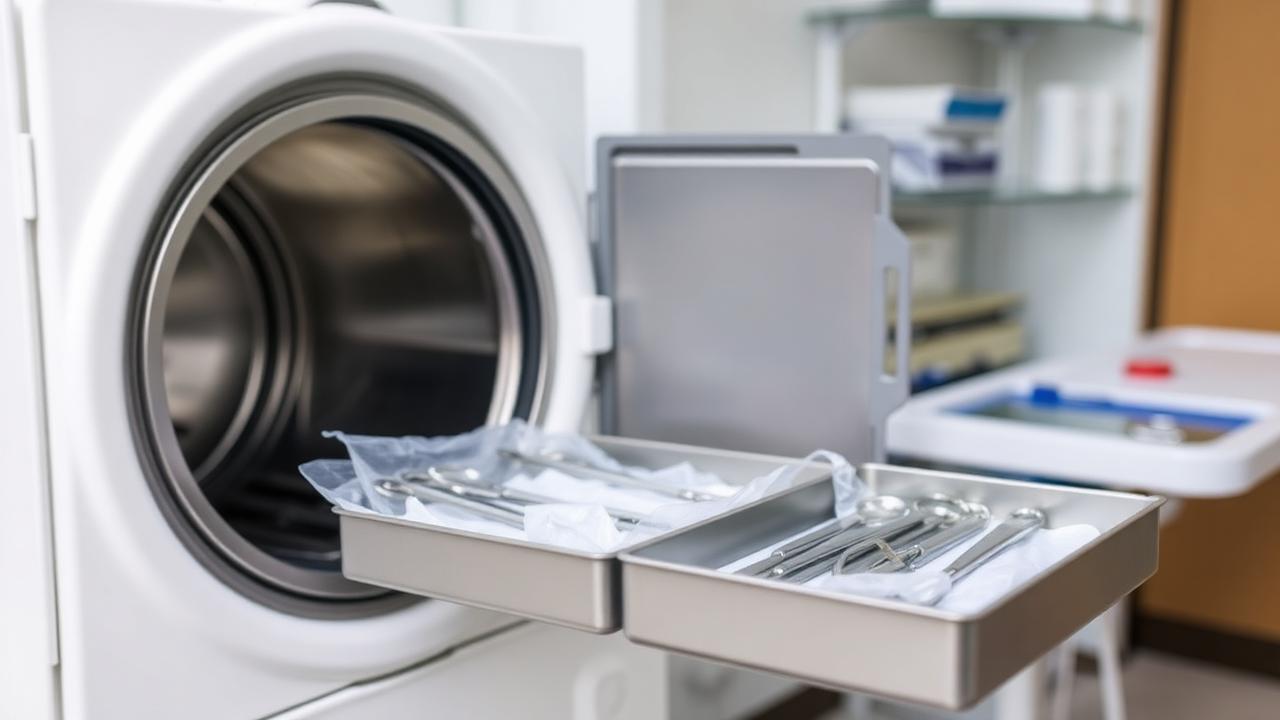
The cleaning zone typically pairs a dedicated sink setup with mechanical cleaning — an ultrasonic cleaner, and increasingly a washer-disinfector, which automates cleaning and thermal disinfection with documented, repeatable cycles. The packing zone needs generous clear bench space, good task lighting for inspection, and sensible storage for pouches and wraps. The sterilisation zone centres on the steriliser itself: for wrapped and hollow instrument loads, practices overwhelmingly choose Class B vacuum autoclaves — German-engineered Melag Vacuklav units are the benchmark we install most. Allow clearance for door swing, ventilation and heat dissipation, and position the unit so unloading flows naturally toward storage.
Water quality and documentation
Steam sterilisers require appropriately treated water — hard mains water shortens steriliser life and can compromise cycles. Plan for demineralised water supply, whether by cartridge or a plumbed treatment unit, when you rough in the room. Equally, plan how every cycle will be documented and traced: modern sterilisers support digital logging and paperless traceability, which turns record-keeping from a daily chore into a by-product of normal operation.
The details that make daily life easier
Splashback surfaces that tolerate disinfectants, storage that keeps sterile stock off benches and away from splash zones, mechanical ventilation that manages heat and humidity, and enough general power outlets on their own circuits — these unglamorous details are what staff will thank you for. Involve the people who actually run your steri bay in the design review; they will find the friction points a floor plan hides.
Borg Dental designs, supplies and services complete sterilisation rooms — from Melag Class B autoclaves and washer-disinfectors to ultrasonic cleaners and water treatment. If you are building new or bringing an older steri bay up to current expectations, talk to our team before you lock in the layout.